Table of contents
Everyone says they want “authentic” travel, yet the same photos keep flooding social feeds, the same queues form at the same landmarks and, in peak season, whole city centers can feel like open-air waiting rooms. As tourism rebounds and prices stay stubbornly high across many headline destinations, a quieter question is gaining traction among travelers and destination managers alike: could the places we overlook be the ones that still deliver the unscripted, human-scale moments people crave, and do so without the friction that has come to define modern getaway culture?
Overcrowding is reshaping what “real” means
When travelers complain about a place “not feeling authentic anymore”, they are often describing an environment strained by volume, not a culture that has disappeared. The numbers help explain why that perception has become so widespread. International tourism has surged back strongly in recent years, and in several major European hubs, peak-day visitor density now overwhelms public transport, pushes restaurant reservations into the realm of strategy and leaves residents feeling displaced in their own neighborhoods.
That pressure changes the texture of a trip. Prices rise first, and then spontaneity fades, because every decision becomes competitive: timed-entry tickets, pre-booked tables, “must-do” itineraries designed to beat the crowds, and a constant low-level anxiety about missing out. In that context, even a genuinely historic street can start to feel like a theme park corridor, and the “authentic experience” gets reduced to consumption, a checklist, a photo, a review.
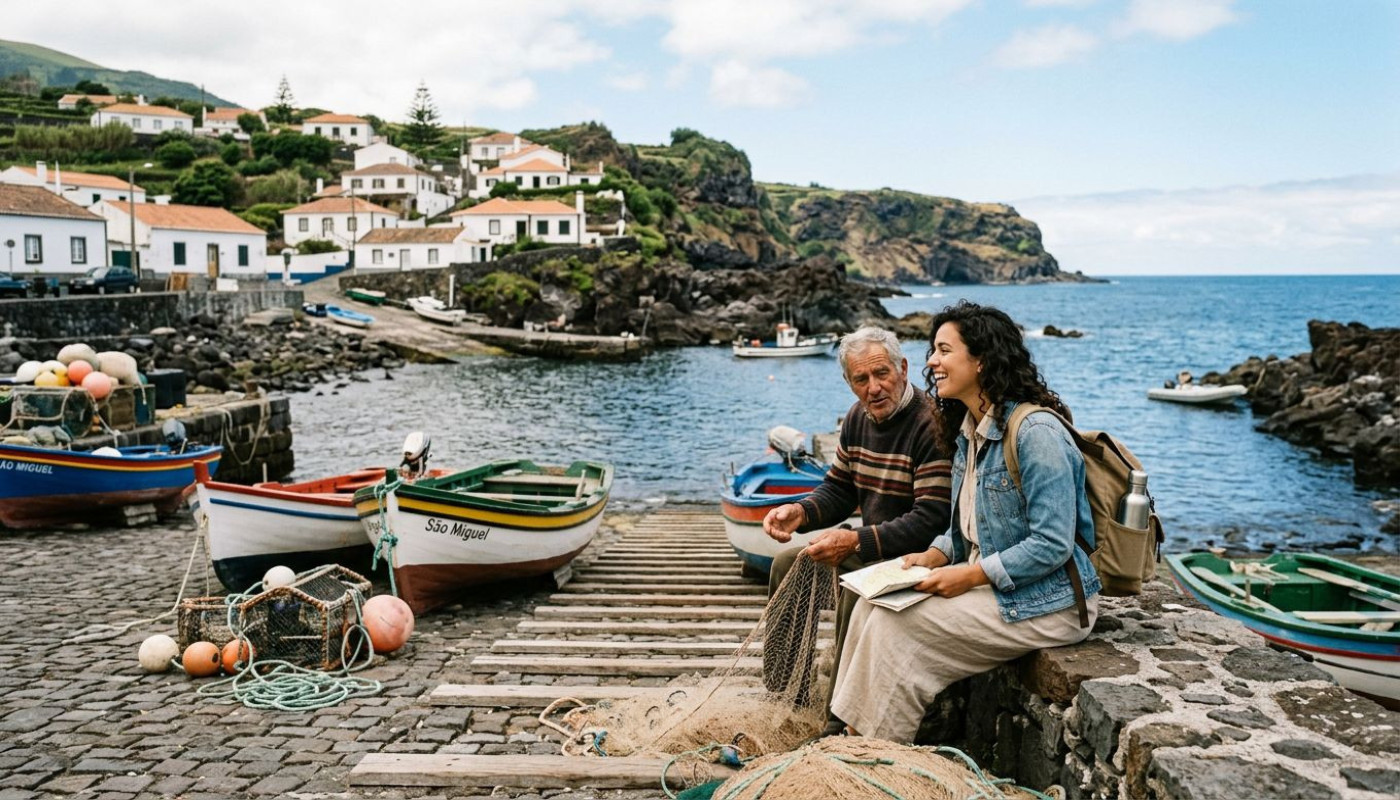
Underrated destinations, by contrast, often still operate at a scale where daily life stays visible. The bakery is busy because locals actually shop there, and the café terrace is filled with people lingering after work, not just rotating through in fifteen-minute slots. This is not romanticism, it is a simple consequence of capacity, because smaller volumes can preserve the informal interactions that make travel feel personal: a chat with a shopkeeper, a recommendation that is not copied from an algorithm, a neighborhood that does not exist primarily to serve visitors.
There is also a civic angle that is hard to ignore. Cities under the heaviest tourism pressure are experimenting with regulatory measures, from restrictions on short-term rentals to new visitor taxes and tighter rules around cruise arrivals. The direction of travel is clear: the most famous places are trying to slow things down, and travelers who want ease, value and a sense of place are increasingly incentivized to look beyond the obvious.
The best stories happen off the main loop
Ask frequent travelers what they remember most, and it is rarely the landmark itself. It is the night market they stumbled upon, the conversation sparked by a football match on a bar TV, the family-run guesthouse that turned into an impromptu cultural exchange, and the detour that became the highlight. Those moments are not guaranteed in any destination, but they are statistically more likely when you are not trapped on a conveyor belt of mass tourism.
Underrated places tend to reward curiosity, because the visitor economy has not yet standardized the experience into predictable packages. That can mean a menu that is not translated into five languages, a museum that closes for a local holiday, and a bus timetable that assumes you will adapt to the town, not the other way around. For some travelers, that sounds inconvenient; for others, it is exactly the point, because friction can be the doorway to engagement rather than a barrier to comfort.
There is a second, subtler advantage: social space. In over-visited destinations, the interaction pattern is often visitor-to-visitor, with locals either priced out, pushed out or simply tired of repeating the same exchanges. In less saturated destinations, the ratio shifts, and even a brief conversation can feel less transactional. It is easier to ask a question without feeling like one more demand on a stretched community, and easier to receive a recommendation that reflects real habits rather than what performs well online.
Of course, “underrated” is not a synonym for “untouched”, and the goal should not be to discover somewhere “before everyone else”, a mindset that quickly becomes self-defeating. The real value lies in choosing destinations that can absorb visitors without losing their everyday rhythm, and in traveling in a way that respects that rhythm, because authenticity is not a product that can be extracted, it is a relationship that forms when a place can breathe.
Digital hype leaves blind spots on the map
Why do so many travelers end up in the same few places? Because the internet is not a neutral mirror of the world, it is an amplifier. Recommendation engines reward engagement, and engagement tends to cluster around recognisable icons, dramatic viewpoints and repeatable content formats. As a result, a relatively small number of destinations dominate attention, and countless others remain in the shadows, even when they offer comparable beauty, history and food, sometimes with better prices and fewer crowds.
This dynamic also shapes expectations. If every video frames a city as a set of “musts”, then the traveler arrives primed to perform the itinerary rather than explore. They may feel they have failed if they do not replicate the same shots, eat the same pastries, and stand in the same spots at the same times. That performance culture has consequences: it concentrates footfall into narrow corridors, inflates certain businesses while bypassing others, and pushes local economies toward homogeneity, because what goes viral becomes what gets built.
Underrated destinations can break that loop, but only if travelers do the work of planning differently. That does not mean going offline; it means using digital tools more intelligently, and cross-checking the hype against local context. Search beyond the first page, look at regional media, scan public transport maps, and read reviews in the local language when possible. Even a small shift in research habits can open up new geographies, and it often delivers what travelers say they want: a trip that feels less scripted.
Practical help matters here, especially when a destination is less represented by the big platforms. Travelers increasingly rely on specialised trip planning resources that focus on a particular region, provide grounded itineraries and logistics, and help avoid the “algorithm funnel” that pushes everyone to the same hotspots. For readers considering Croatia’s Dalmatian coast, including the balance between city life, islands and quieter coastal towns, a starting point is https://www.split-escape.com/, which can be useful when trying to build a trip that feels personal rather than pre-packaged.
How to choose underrated without getting lost
Chasing the underrated can backfire if it becomes a badge rather than a strategy. The goal is not to replace one set of crowded streets with another, it is to choose places that match your travel style, your budget and your tolerance for unpredictability. Start with what you actually want: do you need beaches with reliable amenities, or do you prefer long walks and quiet coves; are you traveling with children or older relatives; do you want nightlife, or early mornings and empty trails? “Underrated” is meaningful only in relation to those needs.
Then think in layers. A common approach is to anchor your trip with one major hub, because it simplifies flights and gives you cultural density, and then build out with day trips or two-night stays in smaller towns. This reduces the risk of feeling stranded, while still delivering the benefits of lower-traffic areas. Travel managers often point to dispersion as a healthier model for destinations too, because it spreads spending beyond a single historic core and supports a wider range of local businesses.
Timing can matter as much as geography. Shoulder seasons often provide the same “underrated” feeling without requiring a radical change of destination, and they can cut costs significantly, especially on accommodation. Even within peak periods, small decisions help: visit popular sites early or late, eat in residential neighborhoods, and use public transport to expand your radius beyond the central grid where crowds accumulate.
Finally, travel ethically and transparently. If you find a place that feels special, resist the urge to frame it as a secret that needs “exposing”, and instead support it in ways that strengthen local life: pay fair prices, choose locally owned operators, respect noise and dress norms, and learn a few phrases. Authenticity is not a location pinned on a map, it is what happens when visitors arrive with attention, patience and a willingness to adapt.
Planning checklist: budget, bookings, and support
Book key transport early, and leave room for flexibility; that balance keeps costs down while protecting spontaneity. Set a clear daily budget, and track accommodation, meals and local travel separately. Use regional passes where available, and check local tourism sites for cultural discounts. Reserve popular restaurants selectively, and keep most meals open for discovery.
On the same subject
Why Lesser-known Destinations Are Topping Travelers’ Wish Lists This Year

Exploring Alternative Industries On Popular Social E-commerce Apps

How ESIM Technology Transforms Travel Connectivity In The Middle East?

Delving into Uncharted Territory: Space Tourism

Urban Exploration: Uncovering Abandoned Places
